
≪60% of "200 freelancers surveyed" said they "want to go back to being a company employee. The biggest concern is "income instability," with 84% feeling stress.
dotcircle

FundBridge, a factoring comparison site operated by dotcircle, conducted a survey of 200 freelancers and sole proprietors on their working styles and cash flow.

EYE CATCHERING
As a result of the survey, 60% of the respondents answered that they have wanted to go back to being a company employee.
The biggest concern was "unstable income" (84%), with earnest comments in the free responses such as "the monthly income fluctuation is too drastic and affects my life" and "I feel that the development of AI does not need people at the bottom like me.
It was also found that 45% experienced delayed payments, 18% were victims of unpaid (overdue) payments, and 11% cried themselves to sleep. On the other hand, awareness of factoring, which is effective in improving cash flow, was low, with 63% of respondents saying they did not know much about it.
■Survey Results Summary
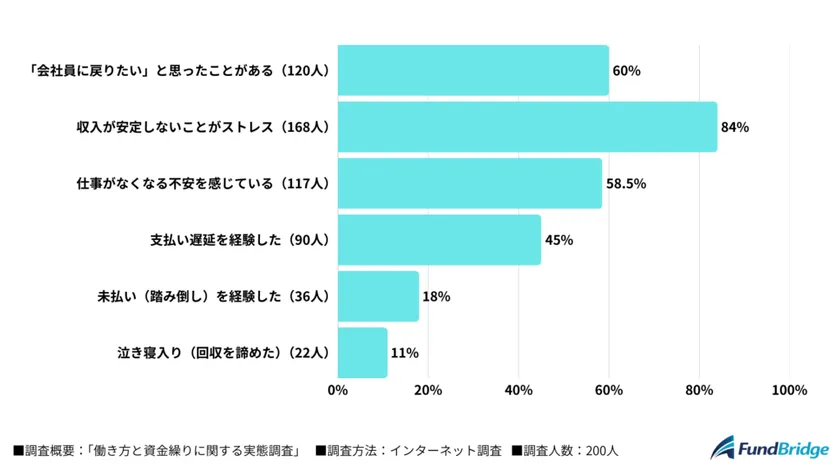
・60.0% (120 respondents) have wished to return to company employment.
Stress about unstable income 84.0% (168 respondents)
58.5% (117 respondents) have felt anxious about losing their job.
Experienced late payments 45.0% (90 respondents)
Experienced nonpayment (overdraft) 18.0% (36 respondents)
11.0% (22 respondents) have cried themselves to sleep (given up on collection)
Summary of Survey Results
Details of Survey Results
1.60% have wished to return to company employment
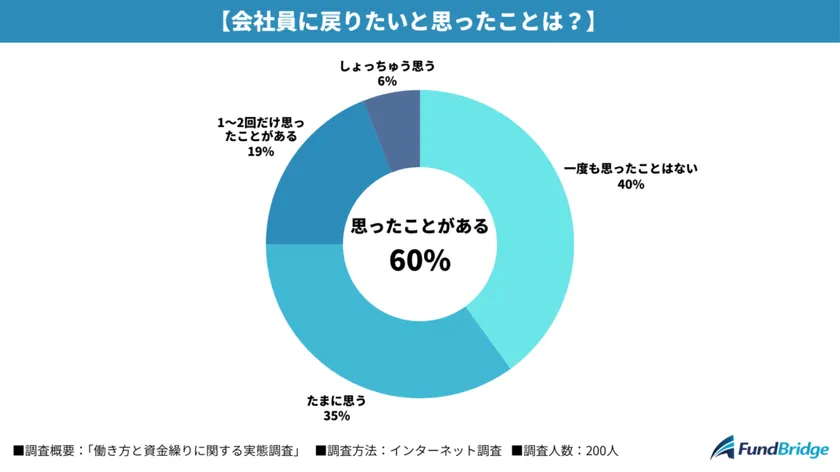
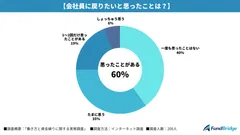
When freelancers and sole proprietors were asked if they had ever wished to return to company employment, 60.0% (120 respondents) answered that they had.
The survey also revealed that 6.0% of the respondents answered "often," indicating that many people are anxious about continuing to work as freelancers.
Have you ever wanted to go back to being a company employee?
Never: 40.0% (80 respondents)
Sometimes: 35.0% (70 respondents)
I have thought about it only once or twice: 19.0% (38 persons)
Frequently: 6.0% (12 respondents)
Wanting to go back to being a company employee
2. The biggest concern is "Unstable income" (84%)
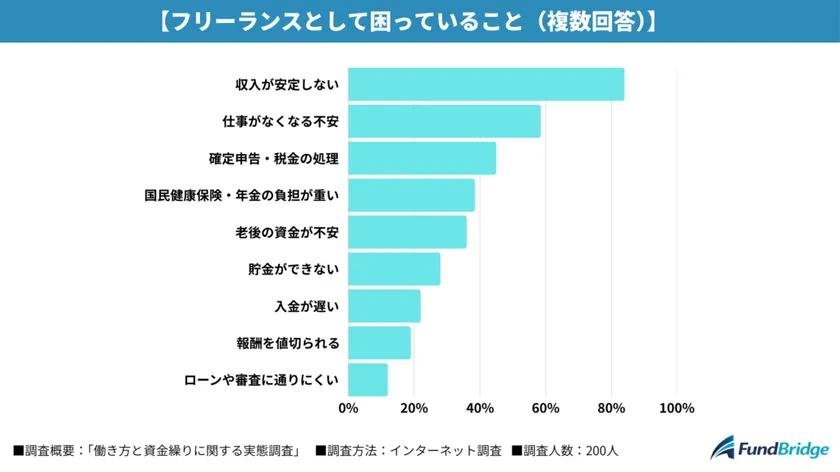
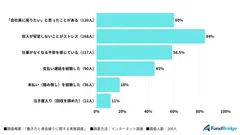
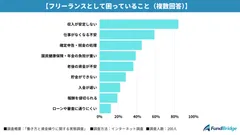
When asked about the biggest problems they face as freelancers (multiple responses allowed), "Unstable income" came in at an overwhelming 84.0% (168 respondents).
This was followed by "Anxiety about losing my job" at 58.5%, "Handling tax returns/taxes" at 45.0%, and "Heavy burden of national health insurance/pension" at 38.5%, highlighting the financial concerns behind the "freedom" of freelancing.
The following are the problems that freelancers face (multiple answers).
Unstable income: 84.0% (168 respondents)
Anxiety about losing work: 58.5% (117 respondents)
Handling tax returns/taxes : 45.0% (90 respondents)
Heavy burden of national health insurance/pension: 38.5% (77 respondents)
Worried about retirement funds : 36.0% (72 respondents)
Inability to save money: 28.0% (56 respondents)
Slow payment (long payment site): 22.0% (44 respondents)
Discounted compensation: 19.0% (38 respondents)
Difficulty in getting a loan or being approved: 12.0% (24 respondents)
Problems as a freelancer
3. Freelancers' true feelings "The hardest thing" (free answer)
When asked about the "hardest thing about being a freelancer" (free answer), we received a wide range of distresses, including unstable income, payment problems, and relationships with clients.
The most common concerns were unstable income, payment problems, and client relations.
The monthly income fluctuates so wildly that it is affecting my daily life. It's hard to keep up the pressure every month." (Freelance for less than one year)
A client who had been regularly offering me work for more than five years ended their business, and my income decreased accordingly. Since then, I have found it somewhat difficult to find work.
"It was hard to go from 50,000-100,000 yen a month to zero yen. My client's business shrank due to the Corona disaster, and I was out of work for a while" (freelance for more than 5 years)
[Anxiety due to the rise of AI
"For the past few months, I haven't been able to get any illustration work. I feel that there is no need for a bottom-of-the-barrel illustrator like me. I feel that. Now is the hardest time.
The decline in remuneration with the development of AI and other tools is the most frequent and hardest thing to deal with on a daily basis" (Writer)
[Voices related to payment problems
The company said they would transfer the money on what date, but it was extended to a few days later, and then later... and finally they stopped replying to my messages. The hardest part was watching the balance in my account dwindle rapidly.
I completed a job, but the company went bankrupt before I received payment, and I didn't receive a single yen.
I received a job from an acquaintance and was promised that I would be paid once I made a sale. I still have not been paid, and I am considering a lawsuit.
Burden of taxes and social insurance premiums
"Taxes and social insurance premiums are much higher than when I was a company employee. In particular, health insurance premiums are so high that I wonder how much is taken from me. The burden is greater than income tax" (freelancer, 3 years)
4.45% experienced "payment delays," and 18% were victims of nonpayment
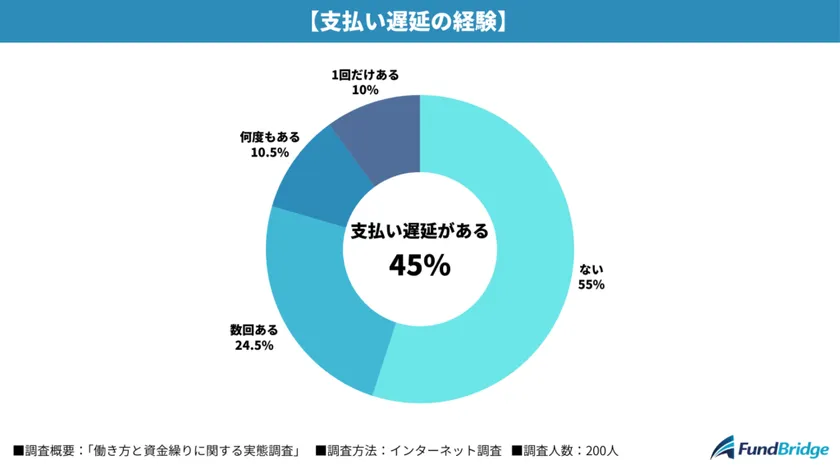
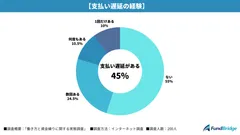
We found that 45.0% (90 respondents) of freelancers have experienced late payments.
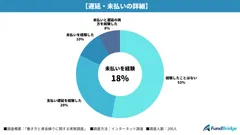
More seriously, 18.0% (36 respondents) experienced "unpaid (overdue)" payments.
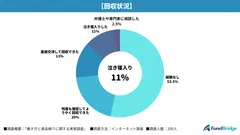
When asked about the status of collection, 11.0% (22 respondents) answered that they "cried themselves to sleep (gave up on collection)," revealing the reality that there are many cases where the respondents cried themselves to sleep because they could not take legal measures.
Experience of delayed payment
Never: 55.0% (110 respondents)
Several times: 24.5% (49 respondents)
Many times: 10.5% (21 respondents)
Only once: 10.0% (20 respondents)
Experience of late payment
Details of delays/non-payments
Never experienced late payment: 53.0% (106 respondents)
Experienced late payment (eventually paid): 29.0% (58 respondents)
Experienced nonpayment (overdraft): 10.0% (20 respondents)
Experienced both non-payment and delay: 8.0% (16 respondents)
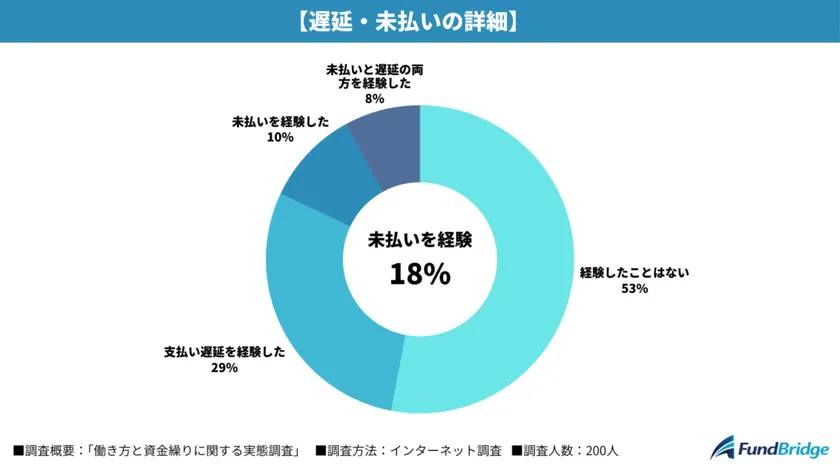
Details of Delayed and Unpaid Payments
Collection Status】】・No experience
No experience: 53.5% (107 respondents)
Finally collected after repeated requests: 20.0% (40 persons)
Collected through direct negotiation: 13.0% (26 respondents)
Gave up on collection: 11.0% (22 respondents)
Consulted a lawyer or specialist: 2.5% (5 respondents)
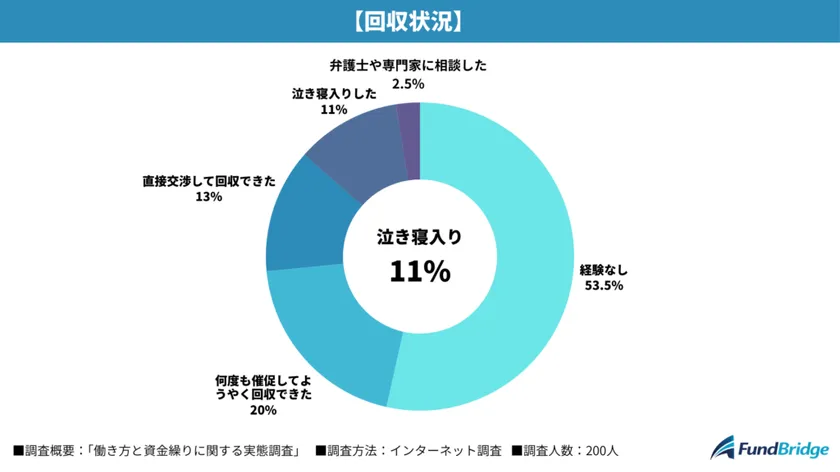
Status of collection
5. About half of the respondents said that it takes more than one month to receive payment.
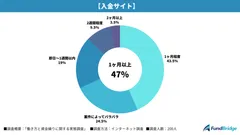
When asked how long it takes to receive payment, 47.0% (94 respondents) answered "more than one month.
The longer the deposit site, the more likely it is that "cash flow problems" will occur, where the funds needed for the next job will be insufficient.
Deposit site
About one month (paid at the end of the following month, etc.): 43.5% (87 respondents)
Varies by project: 24.5% (49 respondents)
Immediate to within a week : 19.0%(38)
About 2 weeks: 9.5% (19)
More than 2 months: 3.5% (7 respondents)
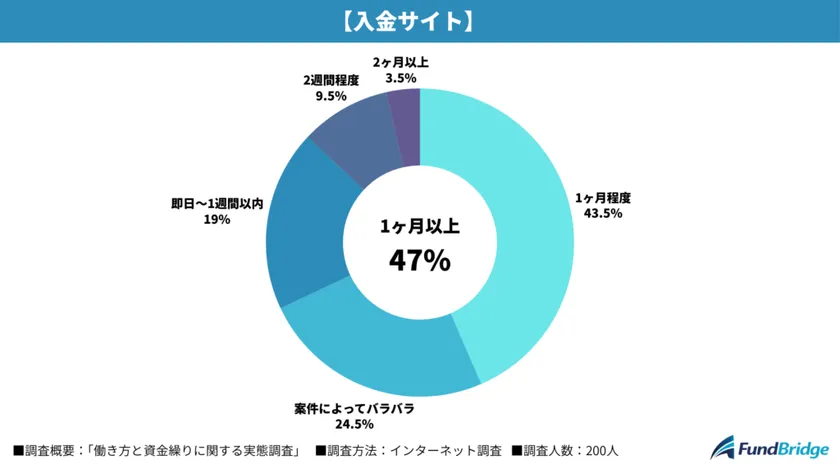
Deposit site
6.36.5% "rarely" sign contracts
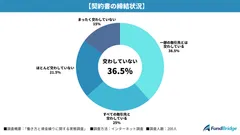
When asked about the status of contracts with suppliers, 36.5% (73 respondents) answered that they "almost never" or "never" have contracts with suppliers.
The lack of a written contract risks making it difficult to take legal action in the event of a payment dispute.
Contracts are signed with some suppliers.
Some suppliers have signed contracts: 38.5% (77 respondents)
All suppliers: 25.0% (50 persons)
Almost none: 21.5% (43)
Not at all: 15.0% (30 respondents)
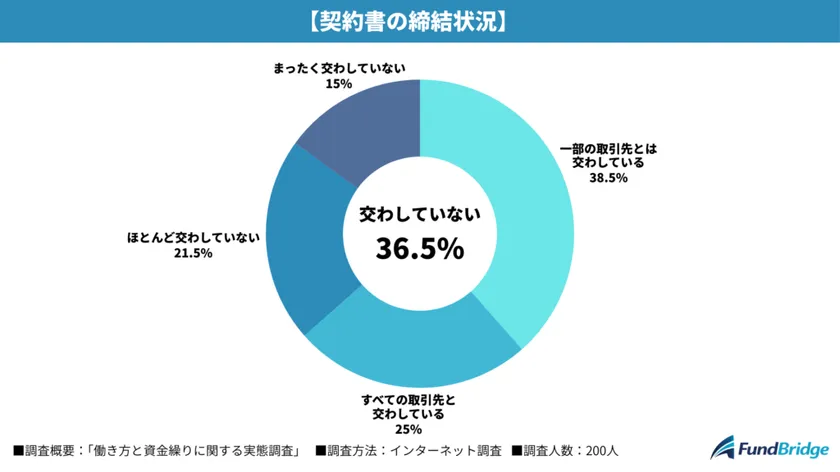
Contracts signed
7. 63% "do not know much about factoring," while 55% "would like to use factoring depending on the conditions.
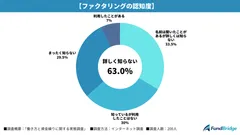
When asked about awareness of factoring, which enables early conversion of accounts receivable into cash, 63.0% (126 respondents) answered that they did not know much about it.
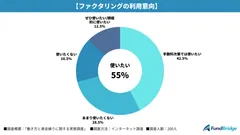
On the other hand, 55.0% (110 respondents) answered that they "would like to use it depending on the conditions" or "definitely want to use it," indicating that there is a potential need for a cash flow solution.
Awareness of factoring
Have heard of it but do not know much about it: 33.5% (67 respondents)
Have heard of it but have never used it: 30.0% (60 respondents)
Have never heard of it: 29.5% (59 persons)
Have used factoring before: 7.0% (14 respondents)
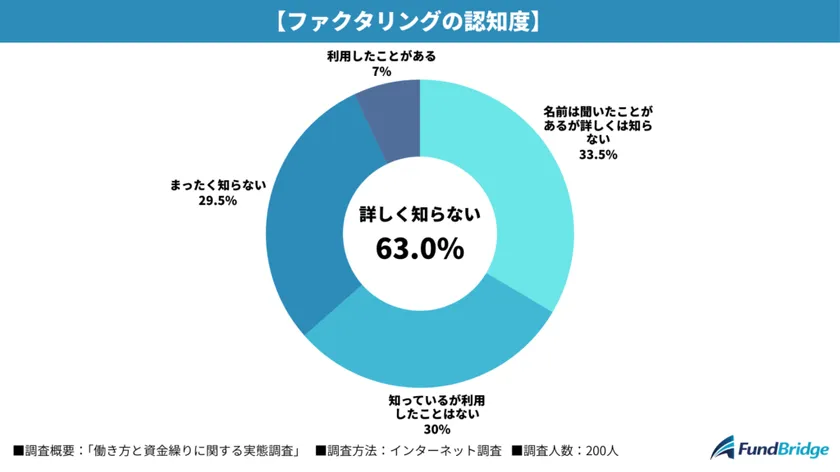
Awareness of factoring
Intention to use factoring
Willingness to use factoring depending on fees: 42.5% (85 respondents)
Not very willing to use factoring: 28.5% (57 respondents)
Willingness to use it depending on fees: 42.5% (85 persons)
Willingness to use factoring: 12.5% (25 respondents)
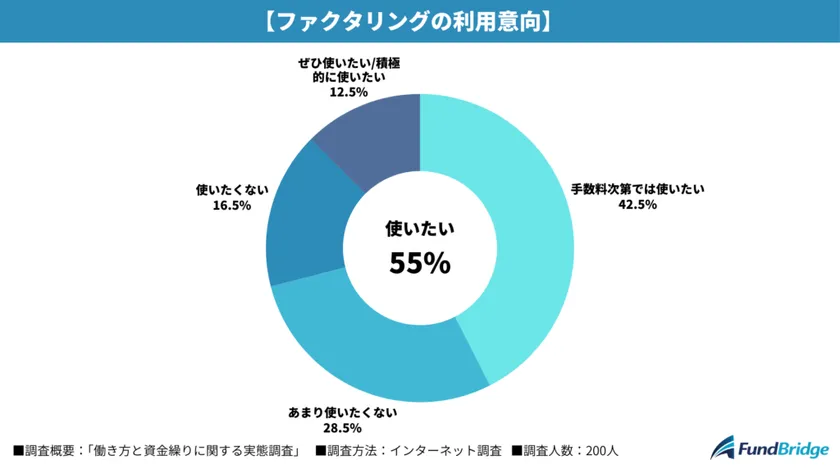
Intention to use factoring
Summary of Survey Results
The survey revealed that many freelancers and sole proprietors share the common issue of "unstable income.
Sixty percent of them have wanted to "go back to being a company employee." Behind this is the cash flow risk unique to freelancers, such as the stress of "unstable income" felt by 84%, "late payment" experienced by 45%, and "unpaid (overdraft)" suffered by 18% of the respondents.
On the other hand, awareness of "factoring," which enables early conversion of accounts receivable into cash, was low, with 63% saying they did not know much about it. However, 55% said they "would like to use it depending on the conditions," indicating that it could be used as a cash management option if the correct information is delivered.
FundBridge will continue to provide comparative information and reviews of factoring companies from a neutral standpoint so that freelancers and sole proprietors can consider funding options with confidence.
■Survey Overview
Survey title : Survey on working styles and funding of freelancers and sole proprietors
Survey Period : February 2026
Survey method : Internet survey
Target : Freelancers and sole proprietors
Number of valid responses : 200
Survey entity : FundBridge editorial department
Respondent Attributes
Type of occupation
Freelance (side/concurrent job): 44.5% (89 respondents)
Freelance (full-time): 38.5% (77 respondents)
Sole proprietor (no store or office): 9.5% (19 persons)
Sole proprietor (with shop/office): 7.5% (15 persons)
Type of Business
Writers and editors: 30.0% (60 persons)
Others: 26.5% (53 persons)
Designers & Creative: 16.0% (32 persons)
Engineers/Programmers : 8.5% (17 persons)
Construction/ Craftsmen: 6.5% (13 persons)
Other professionals: 12.5% (25 persons)
Freelance experience
1 year to less than 3 years: 26.5% (53 persons)
More than 10 years: 19.5% (39 persons)
3 to less than 5 years: 19.5% (39 respondents)
Less than 1 year: 18.5% (37 persons)
5 to less than 10 years: 16.0% (32 respondents)
Annual income
Less than 1 million yen: 49.0% (98 persons)
1 million yen to less than 3 million yen: 27.5% (55 persons)
3 million yen to less than 5 million yen: 14.5% (29 respondents)
More than 5 million yen: 9.0% (18 respondents)
Citation and Reproduction
The contents of this survey may be freely used under the following conditions.
The source: FundBridge, a factoring comparison site.
A link to the survey article (https://fundbridge.jp/media/workingstyle-and-finances/) is provided.
About FundBridge
Site name: FundBridge
URL : https://fundbridge.jp/
Business description: Comparison of factoring companies and provision of information
Features: Compares factoring companies' fees, payment speed, reviews, etc. from a neutral, third-party standpoint.
The site has a database of more than 100 companies.
Image

Logo Image

- Category:
- Research & Reports